Pool Water Balancing
Establishing and keeping the correct water balance is essential for chemical efficiency, bather comfort, equipment protection, and water quality. More than just pH - calcium hardness and total alkalinity matter too.
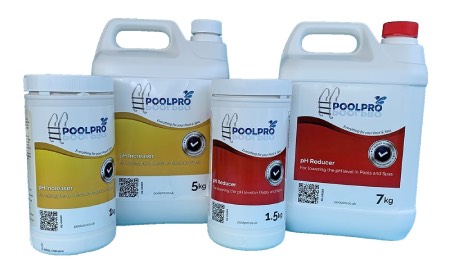
It is commonly believed that keeping the correct pH level is all that is needed to achieve the correct water balance. This isn't quite true, and although pH is important there are other factors and properties that also need to be considered for the ideal levels to maintain, such as Calcium Hardness and Total Alkalinity.
Balancing your Calcium Hardness
Calcium hardness is the measure of how hard or soft the water is. The level will vary depending on where your water supply comes from. For example, some parts of the north have very soft water, and some parts of the south it is very hard. The hardness depends of the amount of minerals that are dissolved in the water. The more mineral salts, the harder it is. Low Calcium hardness can result in corrosive water, etching of surfaces, staining and foaming. High calcium hardness can result in scale formation, filter calcification, cloudy water and reduced sanitiser effectiveness.
Balancing your Total Alkalinity
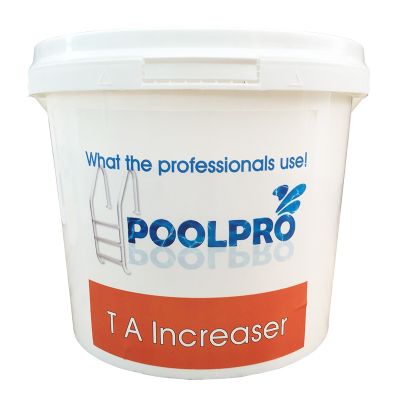
Total alkalinity is a measurement of your water's ability to resist pH change. If the total alkalinity is low then the pH can fluctuate, making it difficult to control and maintain at the ideal level. If the total alkalinity is high, the pH can be difficult to change and will keep rising. A high total alkalinity can also lead to the formation of a bicarbonate scale on pool surfaces, within pipework and in the pool house equipment.
Balancing your pH
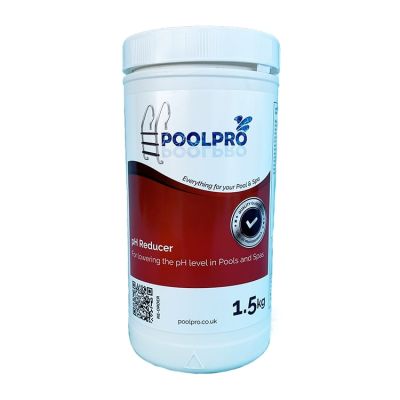
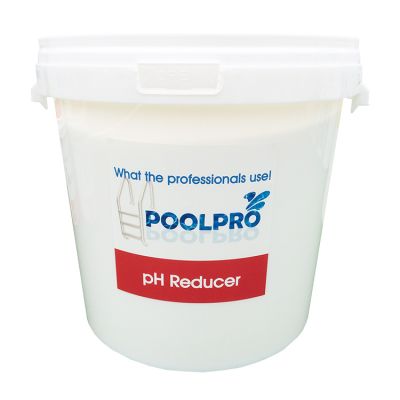
pH is a measure of how acidic or how alkaline your water is. The ideal pH for pools is between 7.2 and 7.6, slightly higher than the midway neutral point on the scale. The scale runs from 0 to 14, with 0 being very acidic and 14 being very alkaline. A well balanced pH in your pool will enhance bather comfort protect your pool equipment from aggressive and corrosive water. As well as corrosive water, a low pH can result in skin/eye irritation, staining, etching to surfaces. A high pH can result in scale formation, filter calcification, cloudy water, reduced chlorine effectiveness and dry skin.